
CFCR Technologies · 10 October 2026 · Engineering perspective
Follow the workflow
A warehouse scanner, hospital handset and office laptop have different operational demands. A strong signal snapshot cannot tell the whole story of roaming, authentication or application responsiveness. Define the critical routes and tasks first, then test those journeys using representative client devices.
Use analytics to direct investigation
AI-assisted assurance can highlight patterns across sites, access points and clients. Treat an insight as a place to investigate: repeated connection delays may involve authentication or DHCP; retries may point to interference or contention; a route-specific failure may involve an AP placement or client behaviour. Vendor features and available telemetry vary.
Physical reality still shapes performance
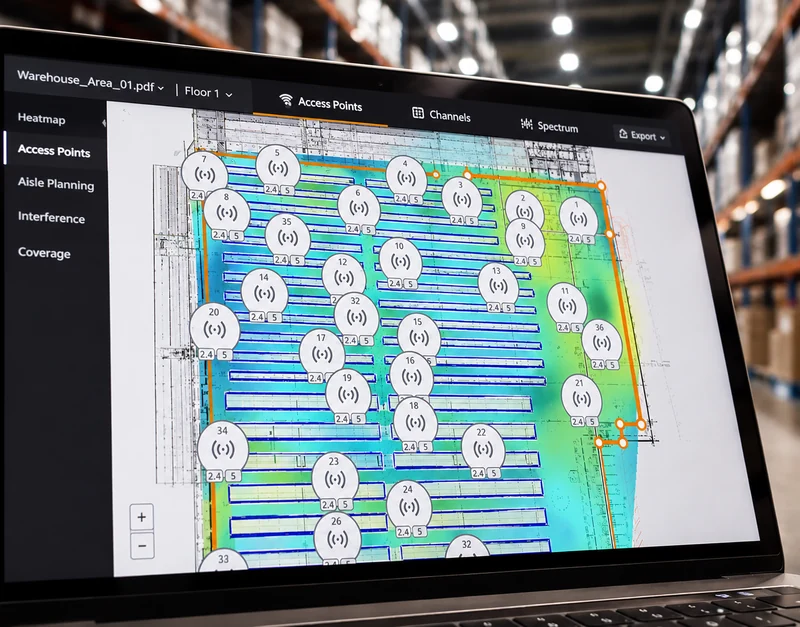
High racks, stock changes, building materials and antenna orientation affect propagation. Reconcile controller telemetry with onsite measurements and floor plans. Changes to channel width, transmit power or roaming settings should follow a baseline and controlled validation, especially where older handheld devices remain essential.
A useful pilot
Select a busy area and record RF measurements, client connection behaviour, roaming interruptions and application performance during realistic activity. Apply one change at a time and compare the same routes. This gives the operations team evidence to decide whether a software adjustment, physical change or additional infrastructure is needed.
Make improvement continuous
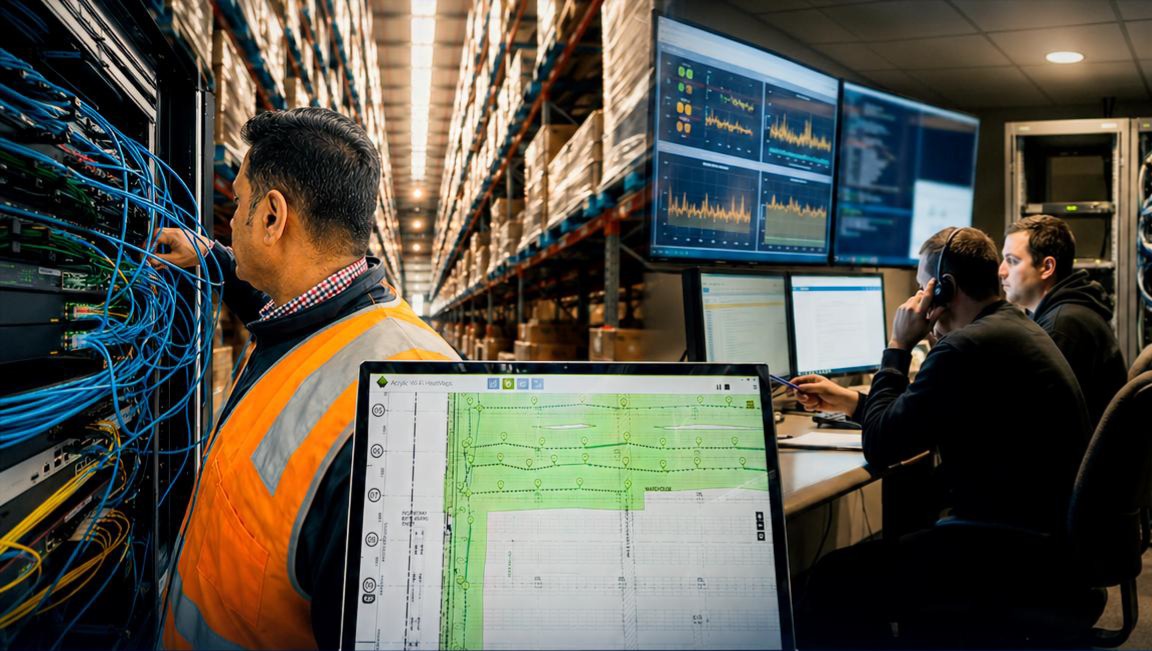
Keep the design and inventory current, review recurring incidents and validate after layout changes. CFCR connects predictive design, onsite surveys, optimisation and managed support across offices, warehouses, healthcare, education and public venues. Talk to us about an assessment focused on your critical devices.